
TBA’s new training programme has created a skilled cohort of 41 African forest restoration professionals from 16 countries across Africa. They now have the expertise to design evidence-based forest restoration programmes that achieve sustainable outcomes, mitigate climate change and provide a host of ecosystem services for livelihoods and human wellbeing.
As Vincent Ayang from Nigeria put it “Our take home message is that restoration is much more than just planting trees”
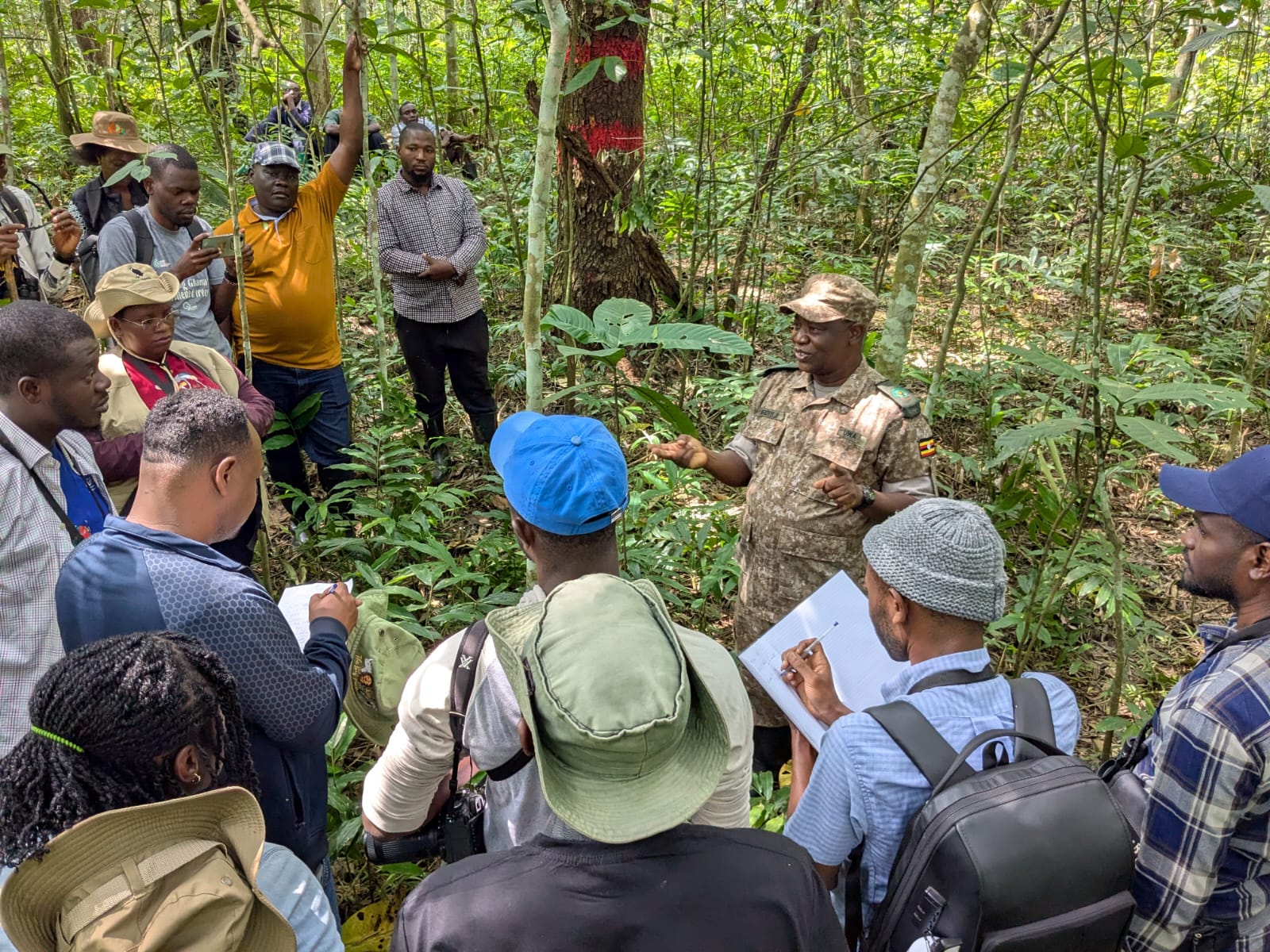
We ran two field courses in Kibale Forest in Uganda – “a living laboratory” for restoration and conservation management. Over each 12 day course (in February 2025 and 2026,) our African participants learned the science and practice of evidence-based forest restoration, ecological monitoring and stakeholder engagement. The diversity of participants we brought together meant that every discussion was enriched by a wealth of perspectives and peer to peer learning.
James Wambura from Tanzania told us “In two weeks I learnt a year’s worth of knowledge. This is the first time I’ve learnt about indicators that we can use in our monitoring plans”.
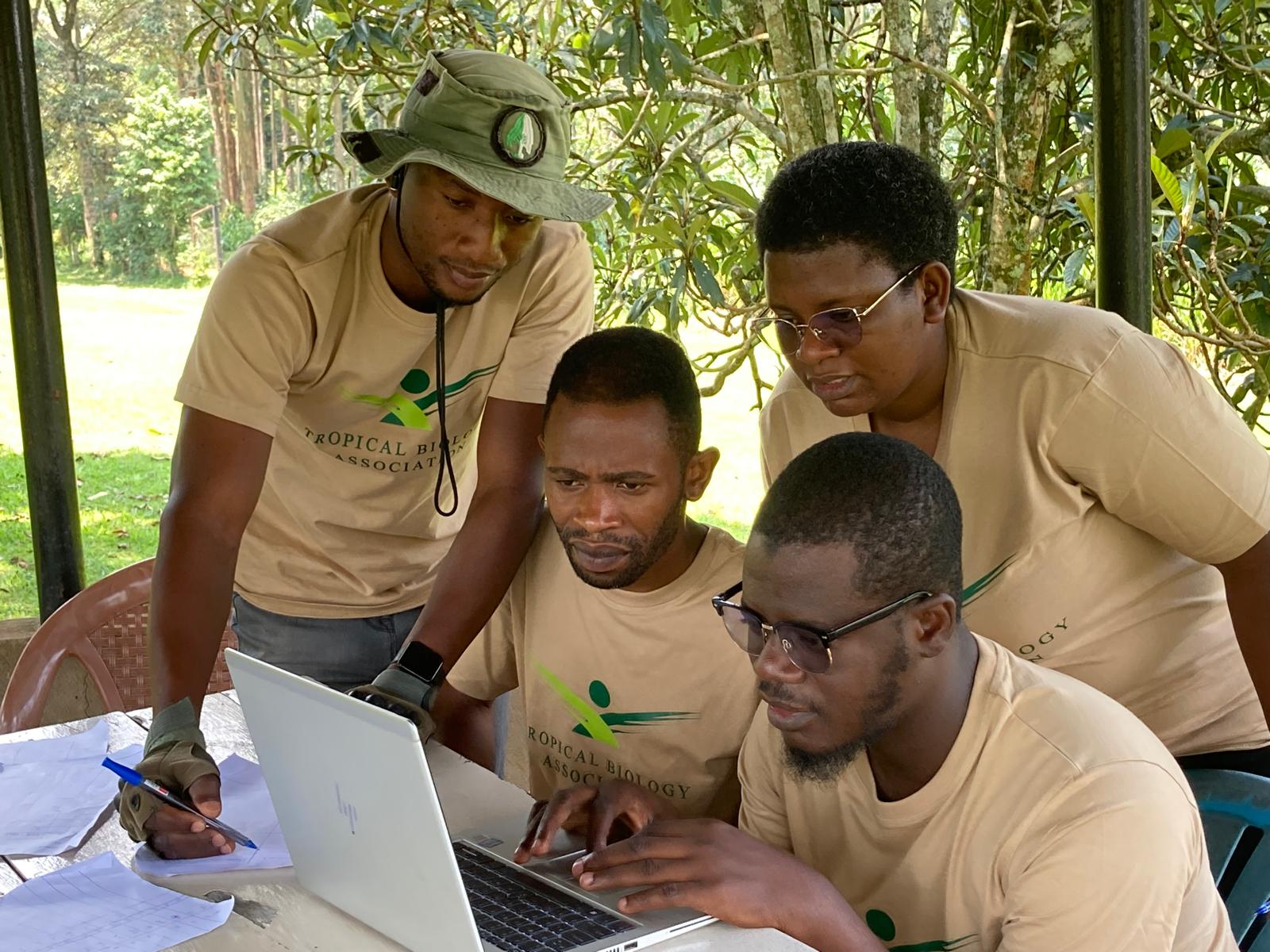
Our field courses were part of a two-year programme we ran in partnership with Kabale University, Uganda and funded by the Darwin Initiative through the UK Government. During the programme, Kabale University produced two new MSc modules in forest restoration – designed to generate skilled graduates that government and NGO’s need to carry out restoration in Uganda.
Impacts from the field courses
The training had dramatic impacts. After returning home, participants from the courses described fundamental shifts in the way they design and monitor restoration and the manner in which they communicate with communities and funders.”
Here are some examples
Letting the forest recover itself
Alice Mutemi, Kenya Forest Service, Kenya
Alice used her fresh knowledge to apply a principle most KFS officers had not used: prioritise natural regeneration before planting. At a degraded river site, she protected existing seedlings and planted only in bare patches. Lower costs, less labour, better survival. She has since shared this approach with 25–30 colleagues. It is changing practice within a major government institution.
From the forest to the funding table
TBA’s training gave Christian the tools to win a competitive consultancy to evaluate community forestry in Ghana and three national stakeholder workshops. The same skills are now embedded in EMBRACE, his 25-community, 1,250-household agroforestry project across Ghana and Kenya.
“It was priceless — we learnt things we could not have gained from any other course.” — Christian Opoku-Kwarteng, CSIR Ghana
Forests reborn in the Bale Mountains
Mesfin Boja Doyo, Ethiopian Biodiversity Institute, Ethiopia
Mesfin returned to the Sirach Forest and began again, differently using the tools and inspiration from the TBA course. The community he worked with created a new governance structure so that the forest belongs to all and is exploited by none. He also generated a new monitoring plan with adaptive management. There are now 30 hectares under restoration with springs recovering and 80% seedling survival rate. The community now calls it a living green belt.
Looking ahead
TBA’s ambition is to reach 100 restoration managers from 20+ African countries in the coming years and to support other African universities to embed similar programmes in their teaching courses. Our partnership with Kabale University shows it can be done. We are looking for partners to join us in scaling up these impacts.
Latest News
Shaping the future
A new wave of future conservationists is being launched this summer as the TBA’s 2015 programme of field courses passes the halfway mark. Throughout July, 24 biological science graduates from 17 countries spent a month in a global biodiversity hotspot in the Usumbara...
Leading in Miombo woodlands carbon research
Dr. Ezekiel E. Mwakalukwa, a TBA alumnus from Tanzania, is charting the way forward in the sustainable management of the country’s Miombo woodlands. His PhD research data, which is to be included in a key publication on the role of East African Miombo forests in...
TBA alumni: “a critical part of Africa’s future” says UN Special Envoy
In his opening speech at the 2015 African Student Conference on Conservation Science, former President of Ghana and current UN Special Envoy of Climate Change, His Excellency John Kufuor, urged delegates to use the conference as a springboard to action: “TBA alumni...